Division I

Construction &
Skilled Trades

From your first day on a jobsite to journey-level status — and beyond, toward a contractor's license. Trained on live projects, taught by senior field professionals, placed with employers who hire on the books.

Why Now

The trades need people. The pay is real.

Ninety-two percent of construction firms in America report trouble finding qualified workers. Roughly a fifth of the workforce is over 55. And the newest source of demand — the buildout behind artificial intelligence — needs more licensed electrical work than the industry has people to do.

The Bureau of Labor Statistics projects about 81,000 electrician openings a year, every year, for the next decade. That is not a trend. That is a structural shortage, and it is the best news a person starting a trade has had in thirty years. Median wages for California trades apprenticeship completers exceed $70,000, and Southern California demand is strongest in electrical, low-voltage, mechanical, and commercial and industrial work.

And you'll be trained on how the work is actually run now — takeoffs, code and spec lookup, submittals, daily reports, field logging — on the devices the crews carry, with a journeyman next to you explaining why the answer on the screen is wrong. More on that here.
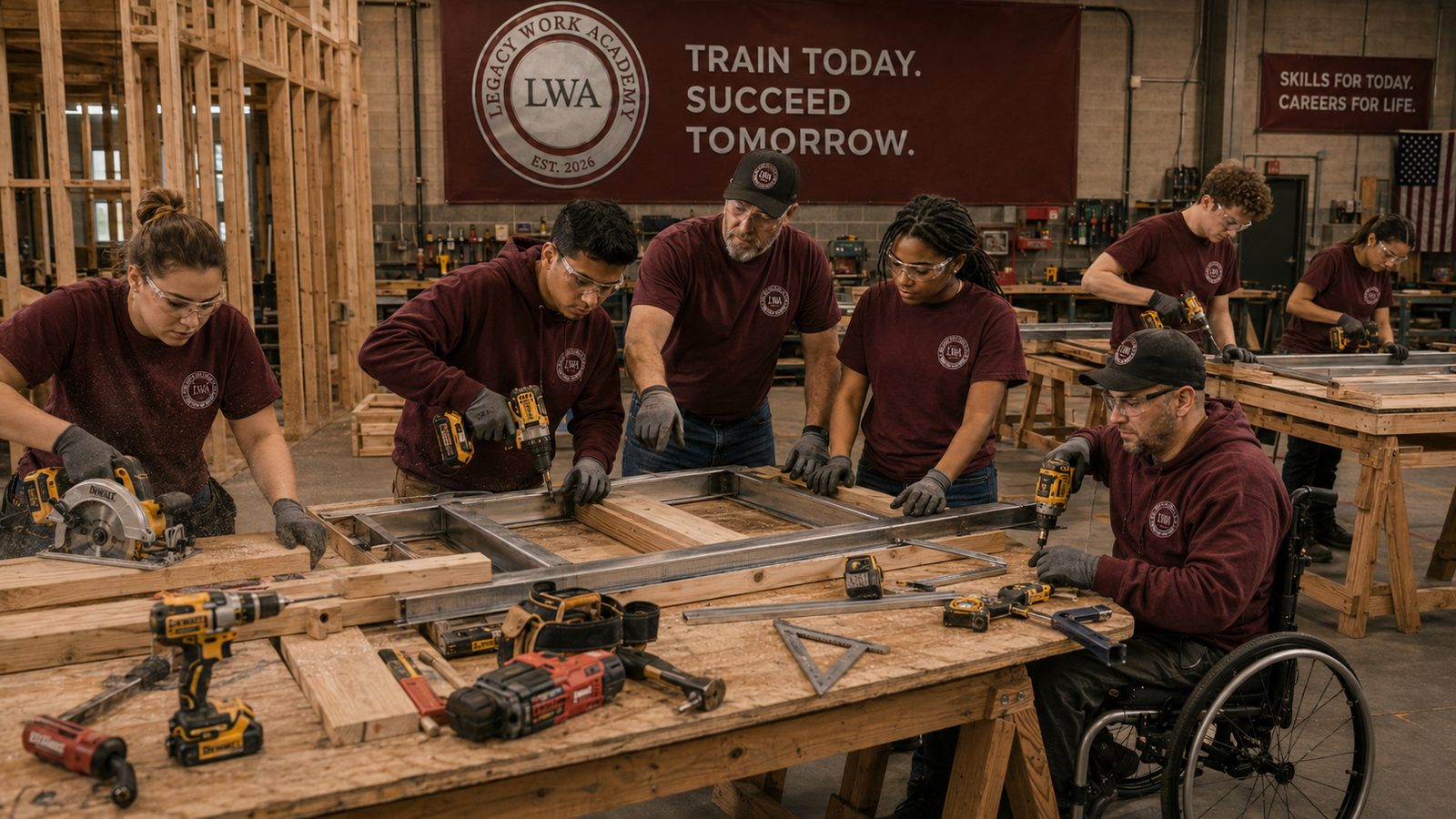
Legacy Work Academy trainees framing and assembling under instruction
Program Tracks

Three ways in, one ladder up

New to the industry

Foundations

A 6–12 week pre-apprenticeship program that makes you jobsite-ready and apprenticeship-eligible. Your OSHA 10 can be earned live online on a weekend before you ever set foot on a site — so the first credential is never the thing that holds you up.

  • OSHA 10-Hour Construction card — available live online
  • CPR / First Aid
  • NCCER Core or MC3 curriculum
  • Tool and equipment fundamentals
  • Placement support on completion
Working & advancing

Craft Advancement

Evening and weekend courses for incumbent workers ready to move up.

  • NCCER craft levels by trade
  • OSHA 30 for supervisory roles
  • Foreman-readiness: planning, crews, communication
  • Equipment certifications
Employer partners

Employer Academy

Contracted training programs built for construction employers and their crews.

  • Structured onboarding and safety training
  • Skills standardization across crews
  • Lead → foreman → superintendent leadership ladder
OSHA 10 / 30 NCCER Core & Craft Levels MC3 Pre-Apprenticeship CPR / First Aid Equipment Certifications
The Pathway

A career ladder you can verify

Every rung is documented, credentialed, and on the books — because under-the-table years don't count toward a license, a pension, or a future.

Foundations / Pre-Apprenticeship

Safety credentials, core skills, and direct entry into apprenticeship or employment with a vetted employer.

Registered Apprenticeship

Earn while you learn through state-registered apprenticeship — building documented, verifiable journey-level experience.

Journey-Level Status

Recognized completion of apprenticeship, with craft credentials and a proven wage history.

Contractor's License Pathway

Four years of verifiable journey-level experience plus exams opens the door to a California C-class contractor's license — and business ownership.

Trained where the work happens

Our anchor employer is an operating general contractor. Training draws on live jobsites, senior field staff as instructors, and a trades network that hires — so the distance between the classroom and the career is zero.

The Highest Rung

The power work is where this trade is going.

Data centers, grid hardening, battery storage, microgrids. Every one of them is electrical, low-voltage, and mechanical work — the same trade you start in Foundations, with more training on top and materially better pay.

Data centers alone consumed 4.4% of America's electricity in 2023, and the Department of Energy projects that could reach 12% by 2028. All of it has to be built, wired, cooled, and maintained by licensed people. Industry hiring data puts pay on that work around 32% above standard commercial construction.

What you add

Battery storage and PV endorsements, NFPA 70E and arc-flash safety, and controls and building-management systems for critical facilities. Stacked on the electrical credentials you already hold.

What to know going in

This work follows projects. A large build staffs up for a year or two, then moves. That's exactly why we keep the relationship — when a project ends, you don't start over, you call us.

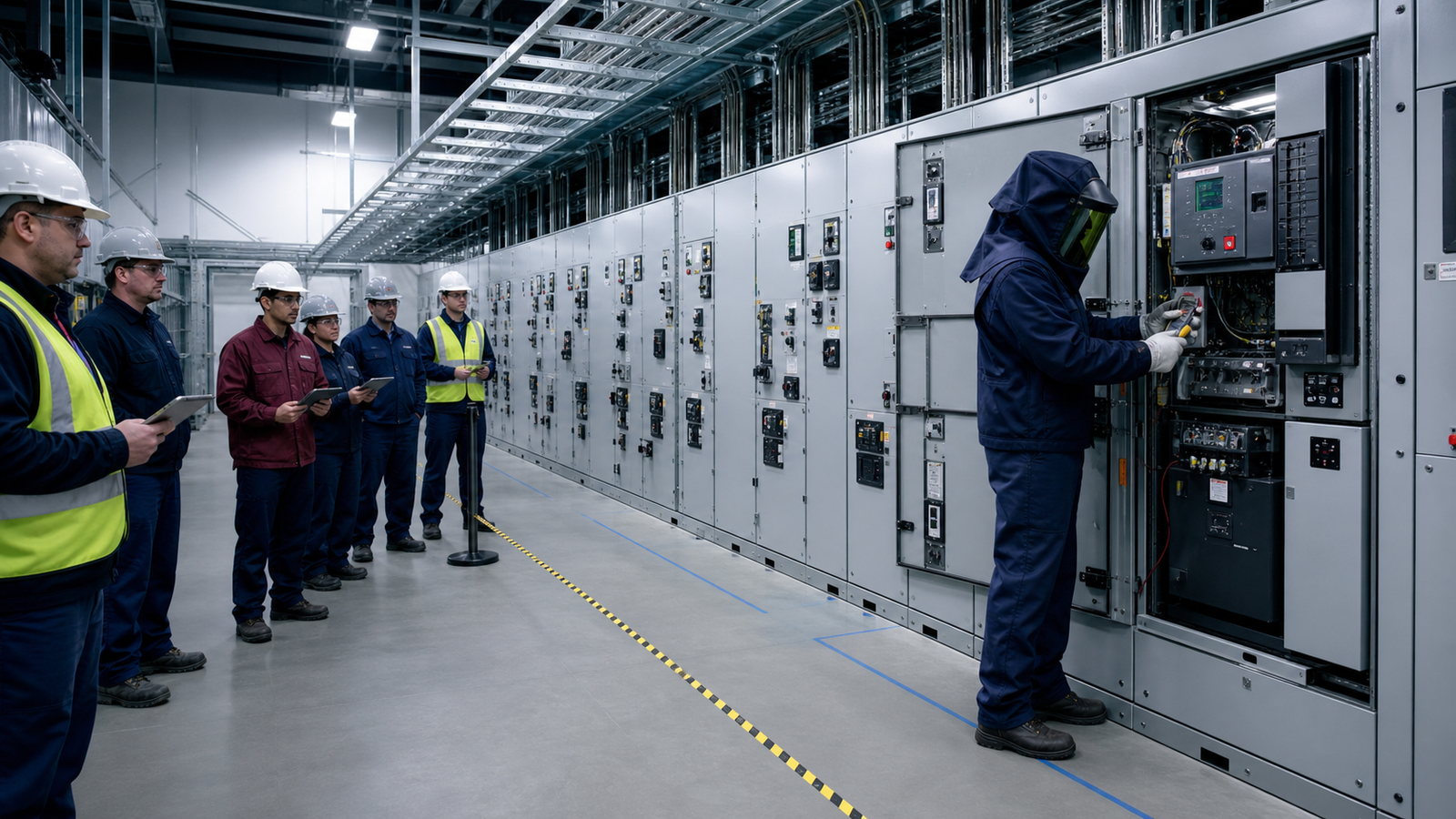
Trainees observing a qualified electrician in arc-flash protection working a switchgear lineup at a mission-critical facility
Mission-critical power work — observed from outside the approach boundary, the way it's actually done.
Veterans & Transitioning Service Members

Your service already counts toward this trade

San Diego trains more of these skills than anywhere in the country. If you did the work in uniform, most of the ladder above is already behind you — it just needs civilian paperwork.

Navy Construction Electricians and Utilitiesmen, and Air Force 3E0X1 and 3E1X1, map directly onto the energy and power work above — the highest-paying rung we train for.

The Trade

Your MOS maps straight across

Navy Seabee ratings — Builder, Construction Electrician, Utilitiesman, Equipment Operator, Steelworker, Construction Mechanic — along with Army 12-series engineers and the Air Force 3E civil engineer field, map directly onto civilian carpentry, electrical, plumbing, HVAC, heavy equipment, welding, and diesel work.

The License

Military time counts where cash work doesn't

California's licensing board runs a veterans program that expedites applications and evaluates military training and experience toward the four years of verifiable journey-level time a contractor's license requires. Your DD-214 and Joint Service Transcript are documentation. Years paid off the books are not.

Start your trade. Or strengthen your crew.

Founding cohorts are forming now. Candidates, employers, and training sponsors — we want to hear from you.

Get in Touch