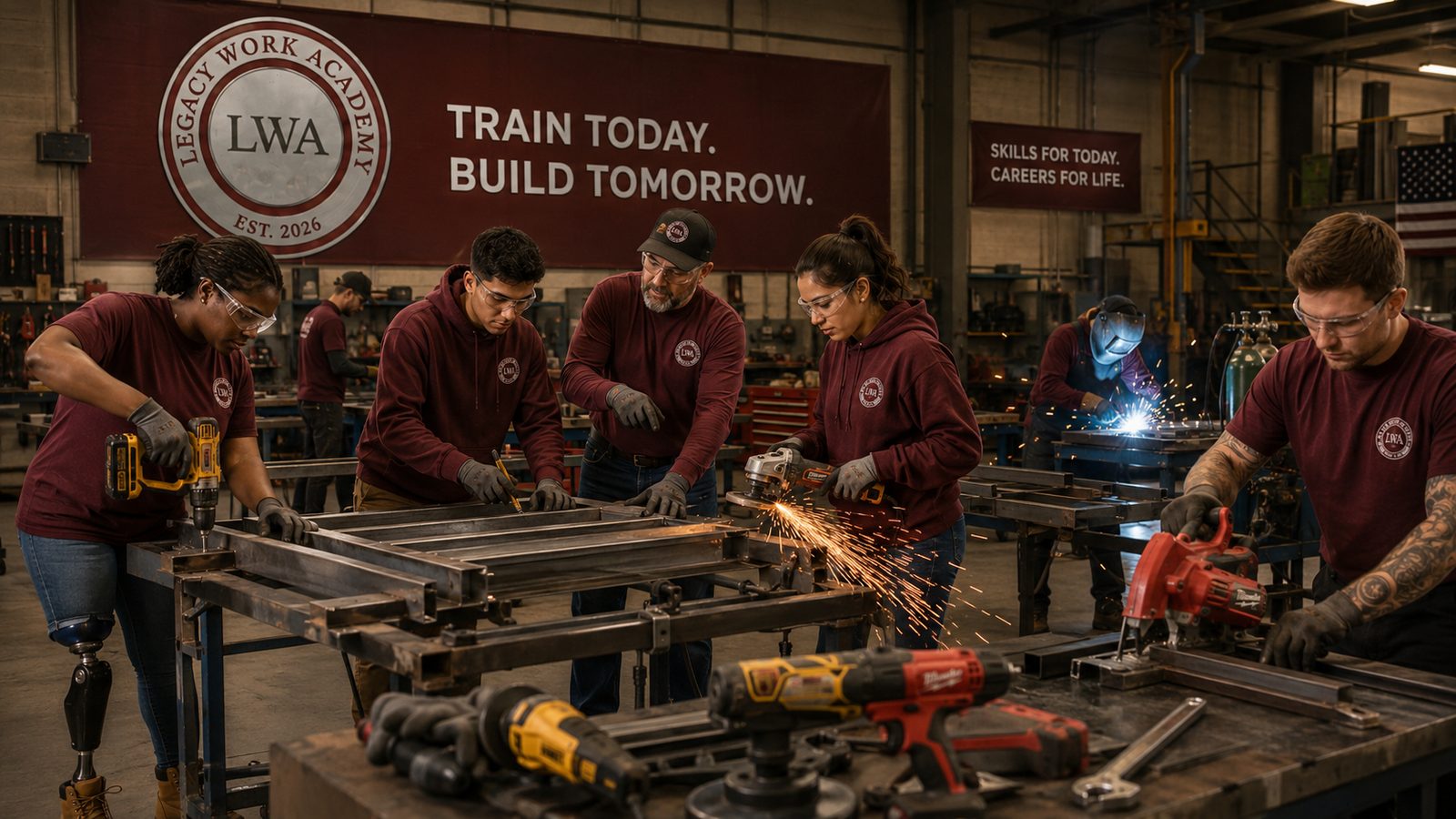
Legacy Work Academy is building two doors for the military community in San Diego and across Southern California. One for veterans who want a credentialed civilian trade or kitchen career. One for the NCOs and senior enlisted who spent years training other people and are the best instructors this industry will ever get.
San Diego is one of the largest military communities on earth — Camp Pendleton, Naval Base San Diego, Naval Base Coronado, MCAS Miramar, Point Loma, MCRD. Most veteran programs treat that community as people who need help. We think that's half the story. You were trained, and a lot of you did the training. The Academy is built to use both.
Short, hands-on programs in construction and hospitality that end in nationally recognized certifications and a placement with a vetted employer that pays on the books. Your military training and experience count toward it — not against it.
If you held an instructor billet, ran a shop, or brought along junior troops, you already have the hardest half of what a great trade instructor needs. We'll help you convert it into a civilian teaching credential and put you in front of a class.
Everything we do gets documented. Hours, tasks, sign-offs, wage progression, credentials — logged as you go, in your name.
For most people that's a nice feature. For a veteran it's the whole thing. The benefit programs you're entitled to — VA on-the-job training, Veteran Readiness and Employment, workforce training funds — all require exactly that documentation as a condition of paying. And the California licensing board will credit your documented military training and experience toward the four years of journey-level experience a contractor's license requires.
That is the single biggest advantage you walk in with, and most veterans have no idea they have it.
Our OSHA cohorts run live on Zoom, statewide, on weekends. You can start before you separate, keep going through a move, and work around a drill weekend without asking anyone for a favor.
Pendleton, Miramar, Coronado, Point Loma, North Island, MCRD — and Irwin, Lemoore, Beale, Travis, Vandenberg, and every armory in between. If you can hold a connection, you're in the room.
You have sat through worse instruction in worse rooms with worse coffee. This one has a roll call, a trainer who has run the work, and a card at the end.
We're looking for people who can do it on this side of the camera too. Live cohorts need trainers the same way a classroom does.
Veterans arrive with earned benefits attached. The Academy is being built specifically so those benefits do the work they were meant to do — covering your training, your tools, and in some cases your rent while you learn.
Legacy Work Academy is now forming, with founding cohorts planned for 2026–27. We are pursuing approval from the California State Approving Agency for Veterans Education (CSAAVE) for on-the-job training and apprenticeship, and building the relationships with VA Veteran Readiness & Employment and local America's Job Centers that make these benefits usable here. We are not yet a VA-approved program, and we won't say we are until we are. Tell us you're interested and we will keep you honestly posted on exactly where each approval stands.
Some of the best-prepared people who will ever walk into a trade program spent four years doing the work in uniform and were never handed a civilian credential for it. That is a paperwork problem, and paperwork problems are solvable.
Construction Electricians, Utilitiesmen, and the Air Force 3E electrical and HVAC fields map straight onto the energy and power work — the highest-paying rung we train for.
Navy Seabee ratings — Builder, Construction Electrician, Utilitiesman, Equipment Operator, Steelworker, Construction Mechanic — map directly onto civilian carpentry, electrical, plumbing and HVAC, heavy equipment, welding, and diesel work. So do Army 12-series engineers and the Air Force 3E civil engineer field.
Army 92G, Navy Culinary Specialist, and Marine Corps 3381 veterans have cooked at volume, on schedule, to a standard, under pressure. The civilian certification ladder — from food safety through executive chef — is built to recognize exactly that kind of production experience.
A California contractor's license requires four years of verifiable journey-level experience. The Contractors State License Board runs a program specifically for veterans that evaluates military training and experience toward that requirement and expedites the application. Your DD-214 and Joint Service Transcript are documentation. Years of cash work off the books are not. For veterans, that is a genuine head start toward owning the company one day.
Every workforce training program in the country is short of instructors. Almost none of them have figured out that the military produces trained, evaluated, credentialed instructors by the thousand and then discharges them.
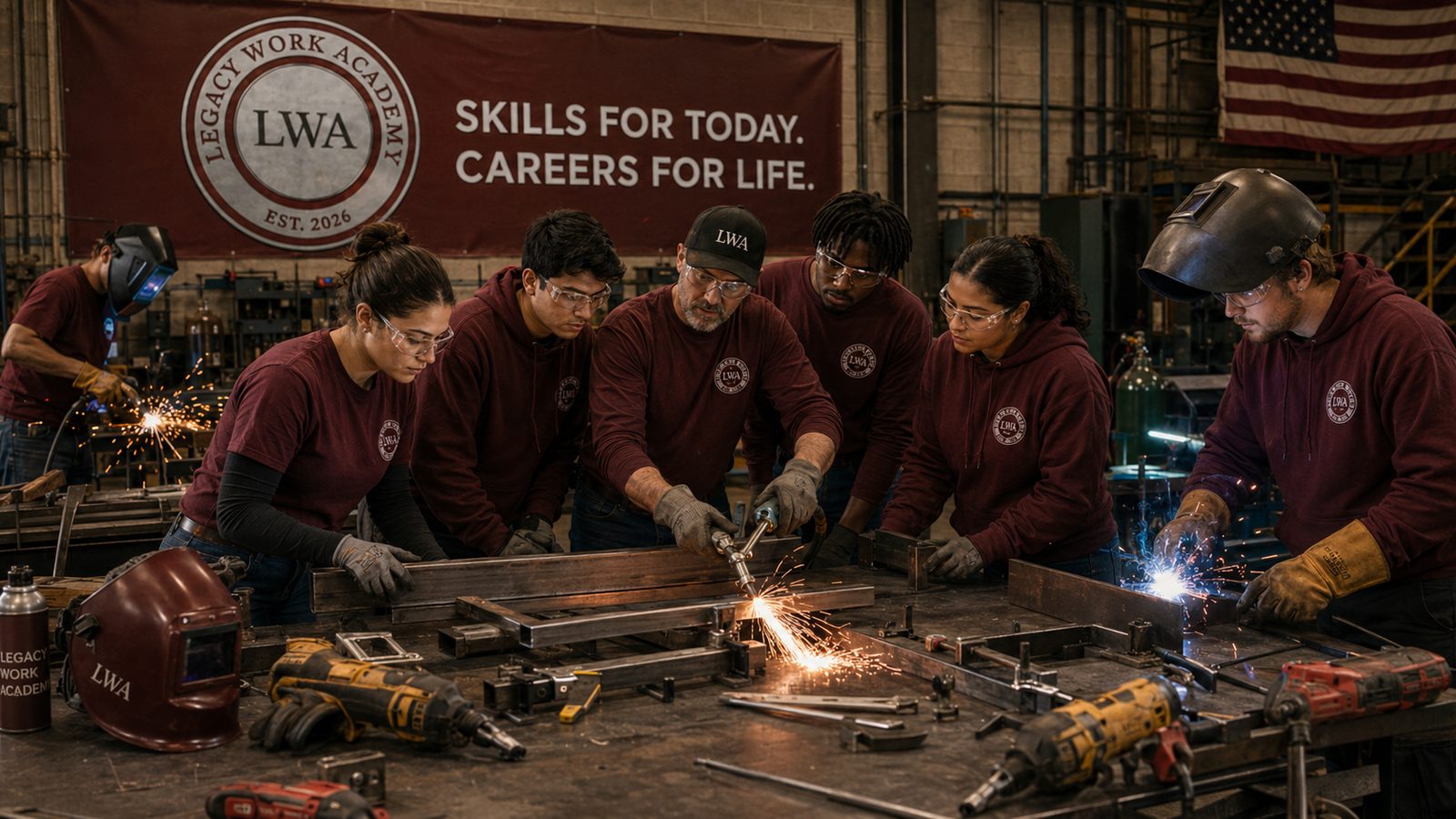
A Navy Master Training Specialist qualification carries a formal American Council on Education credit recommendation and is built to international instructional-design standards. An Army Master Instructor Badge means hundreds of board-evaluated hours in front of a class. Most civilian instructor candidates cannot document anything close.
We'll sponsor you through craft instructor certification — the industry-standard credential that qualifies you to deliver nationally recognized curriculum — and, on the hospitality side, the culinary educator track. You bring the pedagogy and the trade. We handle the paperwork and the cost.
Instructor roles are structured as full-time, part-time, adjunct, and per-diem, because people's circumstances differ and we would rather have you for six hours a week than not at all. Guard and Reserve instructors are welcome — we build the schedule with drill weekends and annual training already in it.
You'll have better tools than you had in the schoolhouse, and less paperwork than you had anywhere. And you will not be asked to become a technologist — the systems carry the admin so you can spend your time on the part you were trained to do.
Veteran unemployment is low. That is not the problem, and any program that tells you it is hasn't looked at the numbers.
The problem is what happens next. Research tracking veterans into their first civilian job found that roughly one in seven was still in it — more than 40% left inside twelve months, and about two-thirds were gone within two years. Fewer than half were even working in the field they wanted. When they were asked why they left, the top answers weren't pay. They were no path, no advancement, and work that didn't use what they knew.
So we didn't build a job-placement program. We built a career ladder with the rungs already attached: a credential that's yours for life, an employer that was vetted before you ever met them, an advancement track to come back to, and instructors who have been exactly where you're standing.
Every Academy placement is legitimate, verifiable, on-the-books employment with an employer we've vetted. Workers' comp. Unemployment coverage. Social Security credit. Provable income for a lease or a mortgage. A documented work history that counts toward a license.
For veterans that standard does double duty — the benefit programs above require documented wages and verified hours to pay out at all. Doing it right is the qualifying condition.
Veteran service organizations, county Veterans Service Offices, base transition offices, workforce boards, and veteran-serving nonprofits: most of you can counsel, refer, and advocate — but few of you can put someone in a welding booth or a working kitchen. That's the gap we're built to fill, and we'd rather fill it alongside you than around you.
Send us candidates. We'll report back on enrollment, completion, credentials earned, and placement — the outcome data your funders and your board are already asking you for.
The Academy is designed to operate as a branded program inside a mission-aligned 501(c)(3). If you serve veterans and want a placement-first workforce offering without building one, let's talk.
Join the hiring consortium. Tell us what you need and how many, help shape the curriculum, and interview graduates first — including through federal programs that share the cost of bringing them on.
Whether you want to train, teach, or refer someone who should — tell us. It takes two minutes and there's no commitment on either side.
Get in Touch